A flickering light, a socket that’s gone warm to the touch, a breaker that trips every time the oven and the AC run together — every villa in Dubai throws up small electrical niggles like this eventually. Some are genuinely nothing. Others are an early warning of a fault that’s quietly getting worse behind a wall.
The problem is that most of these signs look identical from the outside. A flickering bulb could be a loose bulb, or it could be a loose neutral connection somewhere upstream that’s arcing every time the load shifts. Knowing which is which — and knowing where your own competence should stop — is the difference between a five-minute fix and a call to a licensed electrician before something worse happens.
This isn’t a scare piece. Most villa electrical issues are manageable and predictable if you know the pattern. Here’s a practical, safety-first split of what a homeowner in a Dubai villa can reasonably check themselves, and what should always go to a DEWA-compliant licensed electrician.
What’s genuinely safe to check yourself
A handful of checks carry very low risk and don’t require opening anything live. These are worth doing routinely, not just when something goes wrong.
- Reset a tripped breaker once. If it trips again immediately on reset, stop — that’s a fault, not a fluke, and it needs an electrician. A breaker that holds after one reset but trips again later under a specific load (say, whenever the oven and AC run together) is telling you it’s a circuit-capacity issue worth having assessed.
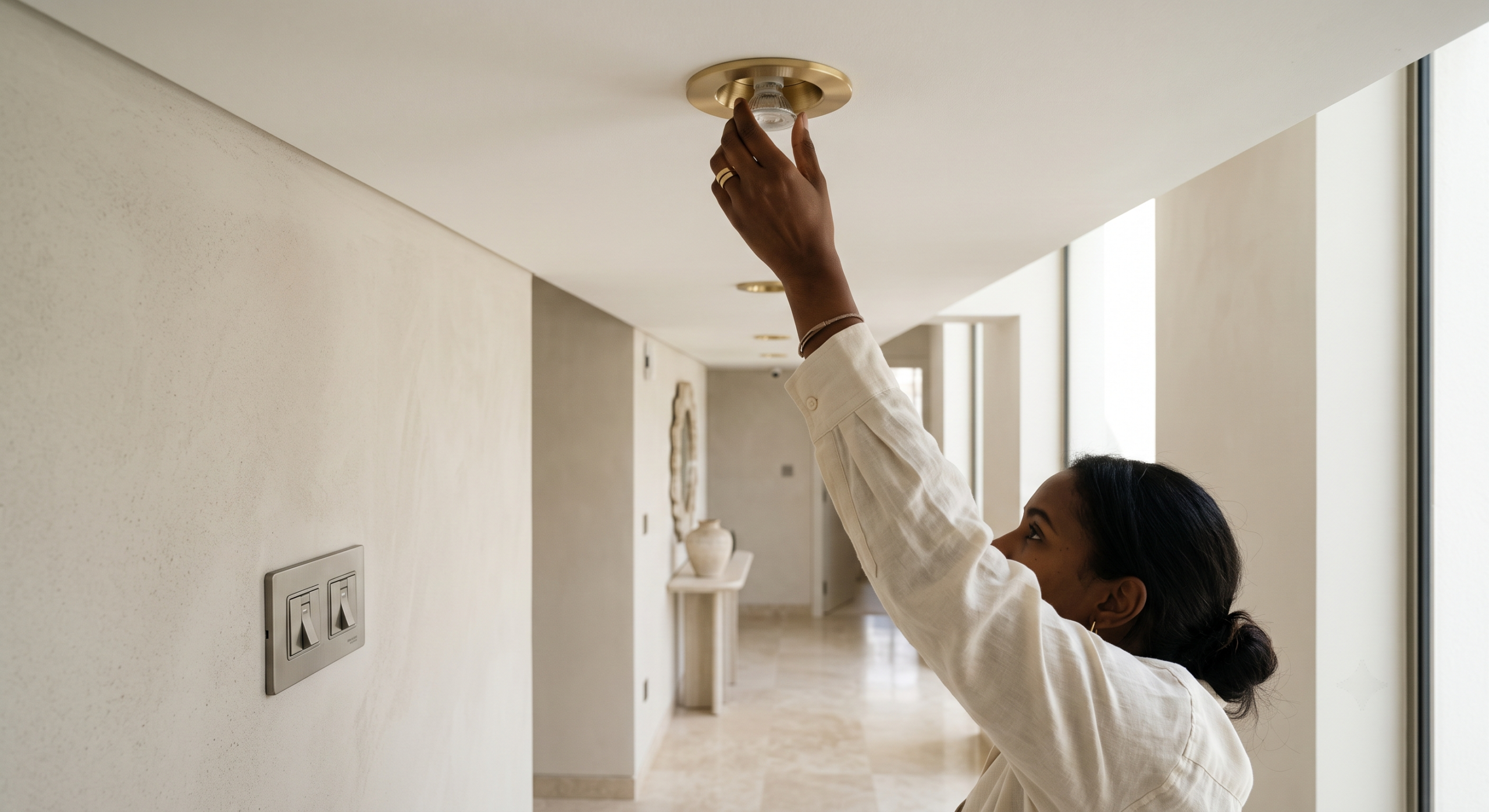
- Check whether a bulb or fixture is loose. A flickering downlight is very often just a bulb that’s worked itself loose in its socket, especially after AC vibration over months. Turn the light off at the switch first, then check.
- Look at plug and socket faces for visible damage. Cracked faceplates, scorch marks, or a socket that feels warm when nothing heavy is plugged in are all things you can see without touching any wiring — and all of them mean stop using that socket and get it looked at.
- Note which circuit is affected. Most modern villas have a labelled distribution board. If you can tell an electrician “it’s always the kitchen ring, never anything else,” you’ve just saved them half their diagnostic time and yourself part of the call-out.
- Test with a plug-in device, not your fingers. If you want to confirm a socket has genuinely died, plug in something low-risk like a phone charger rather than testing with a multimeter or, worse, a screwdriver, unless you’re trained to do it safely.
None of this involves opening a distribution board, working on live wiring, or touching anything behind a wall plate. That line is deliberate.
What should always go to a licensed electrician
DEWA and Dubai Municipality regulations require electrical installation and repair work in residential properties to be carried out by a licensed electrical contractor — not as a bureaucratic formality, but because villa wiring in Dubai carries real risk: high ambient heat, AC loads that stress circuits year-round, and villas that have often been extended or renovated in stages by different contractors over the years.
Hand these over, always:
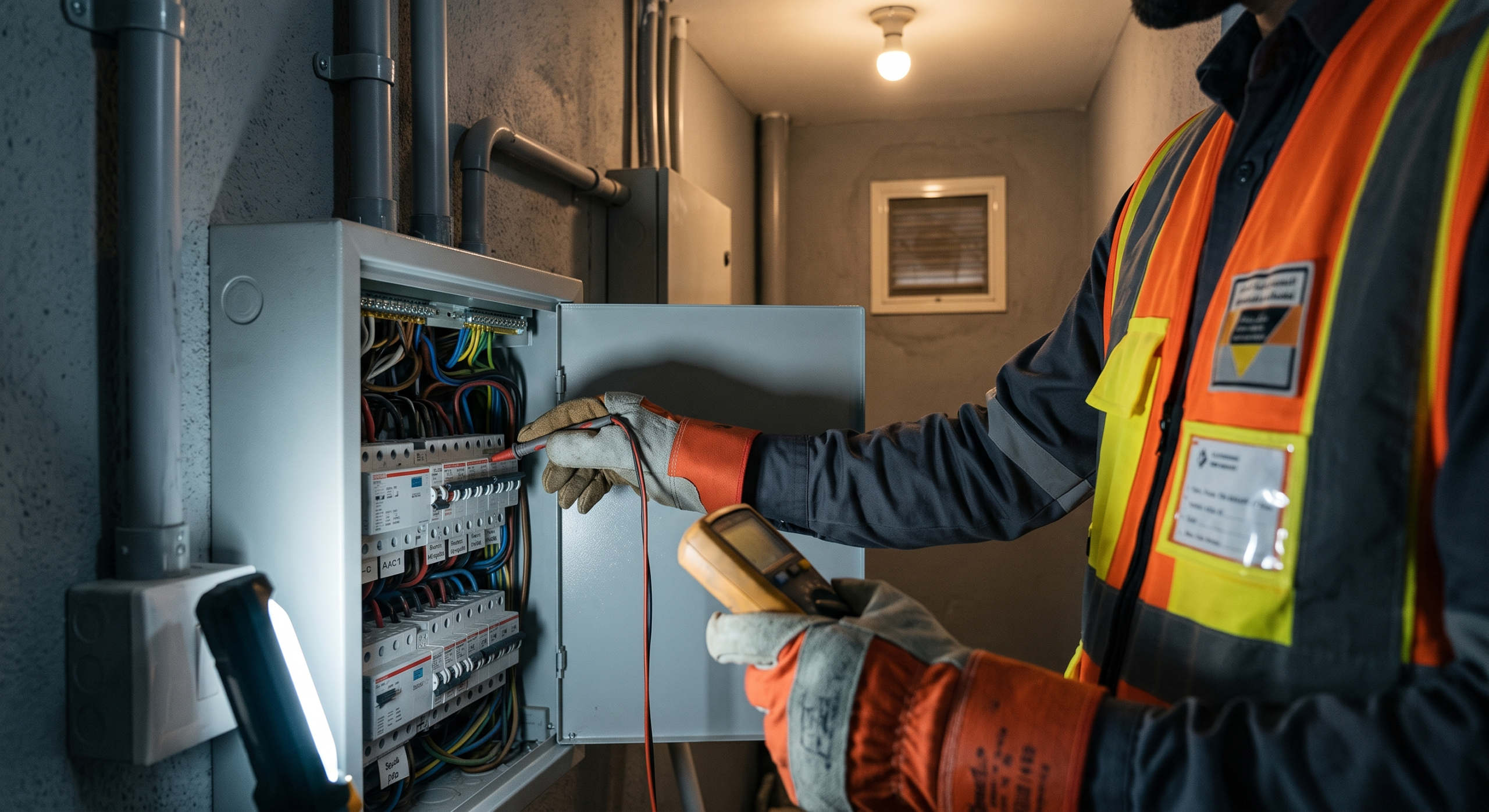
- Any work inside the distribution board. Breakers, fuses, the consumer unit itself — this is live, high-current work, and it’s exactly where a mistake becomes dangerous rather than inconvenient.
- A breaker that keeps tripping after one reset. This usually means either a genuine short, a ground fault, or a circuit that’s carrying more load than it’s rated for. Repeatedly resetting it and hoping is the single most common way small faults turn into house fires.
- Warm or discoloured sockets, switches, or plugs. Heat at a connection point almost always means a poor or corroded connection generating resistance — and resistance generates more heat, which is a feedback loop you don’t want running unattended overnight.
- A burning smell with no obvious source. Even faint and even if it stops. Insulation breakdown inside a wall doesn’t always announce itself loudly, and it’s not a wait-and-see situation.
- Any work involving the villa’s main supply, earthing, or bonding. This is exactly the category DEWA licensing exists for — get it wrong and you’re not just risking a repeat callout, you’re risking the safety certification of the whole property.
- Rewiring after a renovation, extension, or a change in room use. A kitchen that’s been extended, a majlis converted from a garage, a new home office with more equipment than the circuit was ever designed for — all of these need a proper load assessment, not a hopeful extra socket.
If you’re ever genuinely unsure which category something falls into, treat it as the second one. A wasted callout is a minor cost. An electrical fault left to develop in a Dubai summer, with AC systems drawing hard for months at a time, is not a risk worth taking to save an afternoon.
Why villa wiring in Dubai ages differently
Villas here don’t fail the same way flats do, and it’s worth understanding why. Long AC duty cycles put sustained load on circuits for most of the year. Many villas have been renovated in phases — a kitchen here, a pool pump there, a home office added later — often by different contractors at different times, which is exactly how you end up with circuits carrying more than their original design intended. And older properties may still be running on wiring standards or distribution boards that predate current practice.
None of that is cause for alarm on its own. It’s simply why a periodic electrical check, done by a licensed professional rather than only in response to a visible problem, is worth having on the same rhythm as AC servicing — not something to defer until a breaker starts complaining.
Getting it looked at properly
If any of the “always call an electrician” signs above sound familiar, the safest next step is a proper inspection rather than a guess. Welldun’s villa repairs team handles licensed electrical diagnostics and repair work across Dubai villas — AC circuits, distribution boards, socket and switch faults, and full rewiring after renovation — with fixed-price scopes and a 12-month workmanship guarantee on the work carried out.
For villas already on a Welldun annual maintenance contract, electrical checks are typically folded into the scheduled visit rather than needing a separate callout, which is one of the quieter advantages of having one accountable team rather than juggling separate contractors for each trade. If you’re not sure whether what you’re seeing needs a technician today or can wait for a scheduled visit, get in touch and describe what you’re noticing — that alone is often enough to tell.
Frequently asked questions
Is it illegal to do my own electrical repairs in a Dubai villa?
Electrical installation and repair work in residential properties in Dubai is required to be carried out by a licensed electrical contractor under DEWA and municipality rules. Simple, non-invasive checks — like confirming a bulb is seated properly or noting which breaker trips — aren’t the issue; opening a distribution board or working on wiring is.
How do I know if a tripping breaker is serious?
One trip that resets cleanly and doesn’t recur can be a one-off. A breaker that trips again immediately, or that trips repeatedly under a specific load, is signalling a genuine fault or a circuit running beyond its capacity, and should be assessed by a licensed electrician rather than reset repeatedly.
Can I just replace a socket myself if it looks damaged?
No — even a straightforward-looking socket replacement means working at the distribution board or on live circuit wiring, which falls under licensed electrical work in Dubai. A cracked or warm socket should be taken out of use and reported, not opened.
How often should villa electrics be checked in Dubai?
There’s no single official interval, but given the sustained AC load Dubai villas carry for most of the year, a periodic check by a licensed electrician — commonly folded into an annual maintenance visit — is a reasonable rhythm, rather than waiting for a visible fault to appear.